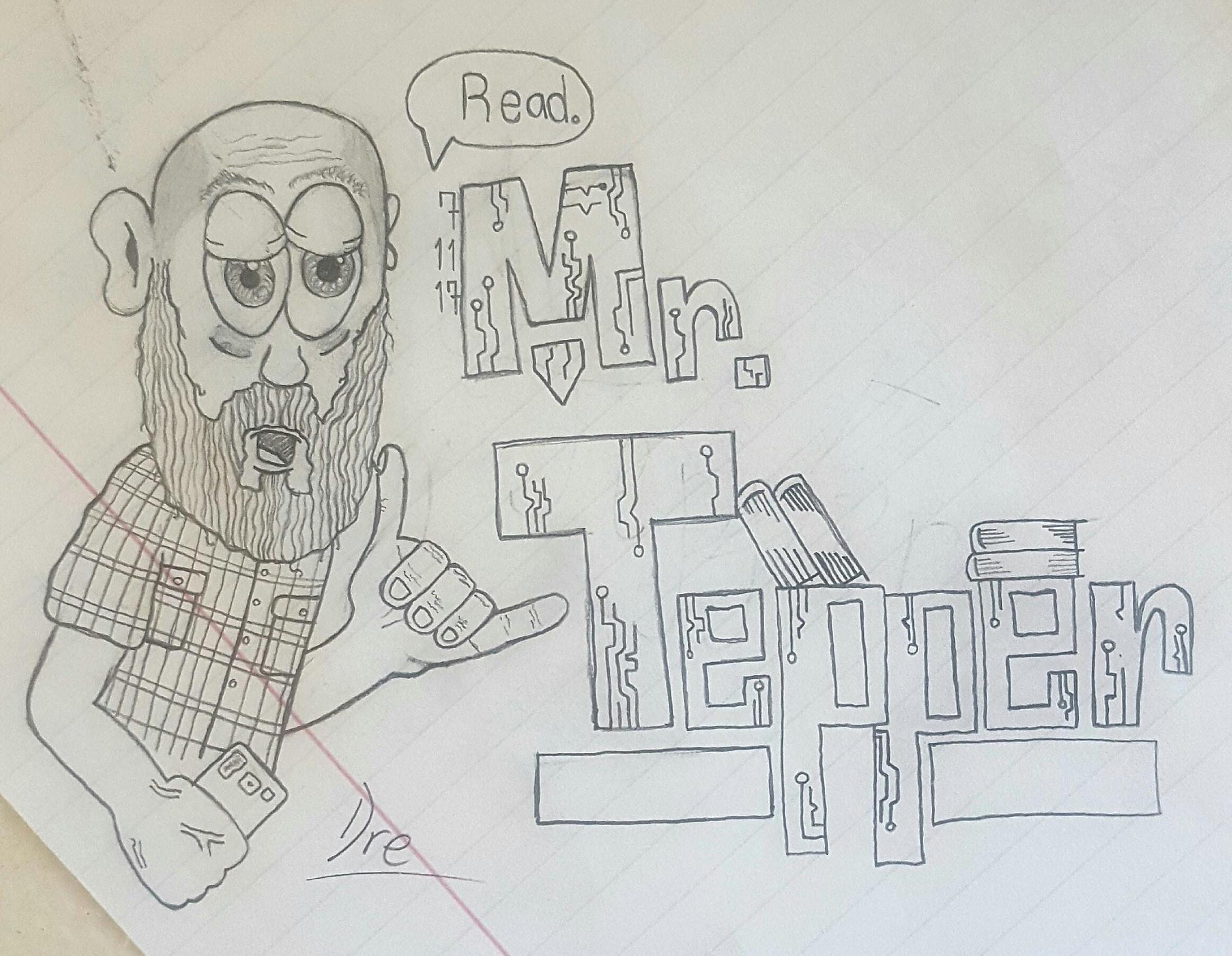
Jamie's Teacher Page
Greetings! Welcome back! My name is Mr. Jamie Tepper, and I teach middle and high school English.
I received my B.A. in English at University of Central Florida in Orlando, FL, and then my M.A. in Education here in Los Angeles at National University.
Please do not hesitate to email me if you have any questions or concerns relating to my class. My email is [email protected].
Thank you!
Mr. Jamie Tepper
7th Grade Course Syllabus
|
Course Information |
Teacher Information |
|
Credit Hour: 5.0 Per Semester |
Name: Jamie Tepper |
|
Marking Period: First + Second Semester |
Phone: 818-342-6133 |
|
Class Location: Room 14 |
Office Location: Room 14 |
|
E-Mail: [email protected] |
Office Hours: 7:30-8:00AM Daily |
School Attributes:
The manner in which we prepare students at Lake Balboa College Prep. is informed by four attributes: (1) Dedicated faculty who will hold themselves to, at minimum, to the same standards as the students we teach; (2) Positive relationships developed and nurtured between and among adults and students; (3) A high level of rigor included in instructional practices via standards aligned and contextually driven instruction; and (4) Connecting positive relationships with effective instruction for positive RESULTS!
Course Description:
During this course, we will read in class nearly everyday (for a grade - at least 20 minutes per hour - except on Tuesdays), and also analyze a variety of text types. In addition, we will evaluate an author's craft through the examination of their language choices, use of text structure, and other literary and narrative elements. We will develop claims, and support them through strategically selected citations from the text. As our understanding of narrative elements and literary devices grows, we will incorporate these devices into our own work. We will use textual evidence and well thought out analysis to prove our main ideas in a variety of ways, namely single paragraphs, three paragraph essays, and also five paragraph essays. Through self and peer evaluation we will grow our own writing practice.
Course Competencies/ Learning Objectives:
During the course we will read many short stories, poems and novels. We will analyze the text and author’s craft, engage in group discussions, look for themes, write arguments, use textual evidence, produce clear and coherent writing, analyze complex characters, determine meaning of words, write essays evaluating the author’s use of narrative elements and literary devices, present information, have collaborative discussions, and work on paper and pen when possible, but also online in class using Schoology, Kami, Google Slides, Google Docs, and iReady/MyPath.
The novels we will likely cover during this 7th grade academic school year include, but are not limited to (in no particular order):
-
- ZLATA'S DIARY
-
- ROLL OF THUNDER, HEAR ME CRY
-
- MY BROTHER SAM IS DEAD (NOVEL + FILM)
-
- ISLAND OF THE BLUE DOLPHINS
-
- SUMMER ON WHEELS
-
- PARVANA’S JOURNEY
-
- THE CALL OF THE WILD +/OR WHITE FANG
-
- THE OUTSIDERS (NOVELLA + FILM)
-
- DIARY OF ANNE FRANK (PLAY +/OR NOVEL + FILM
-
- TANGERINE
-
- VARIOUS EDGAR ALLEN POE SHORT STORIES + POEMS
-
- VARIOUS RAY BRADBURY SHORT STORIES + POEMS
-
- VARIOUS SHORT STORIES + POEMS FROM OUR STUDY SYNC TEXTBOOK
Student Evaluation:
The grading system for my class at Lake Balboa College Prep. is as follows:
|
Projects and Presentations |
- |
45% |
|
Essays, Reading, Classwork, Tests |
- |
35% |
|
iReady/MyPath |
- |
20% |
Attendance Policy:
Regular and prompt class attendance is an essential part of the educational experience. Lake Balboa College Prep. expects students to exercise good judgment regarding attendance and absences. Students will accept full responsibility for ensuring their work does not suffer because of absences. All students are expected to attend every scheduled class on time. Exceptions may be made for illness and valid emergencies.
Class Requirements:
Observe the standards and code of conduct needed to be successful in an academic setting.
This means you will:
Show respect for and recognize the feelings and opinions of others, solve problems that arise in purposeful and diverse ways by considering multiple perspectives in the solutions, make productive use of class time that supports task completion, engage in independent decision making when possible, use your own experiences and knowledge of the codes of academic institutions to guide your decisions, use classroom resources, including peers and teacher to support your continued academic growth.
Plagiarism, Cheating, and Academic Integrity:
Plagiarism is the practice of copying words, sentences, images, or ideas for use in written or oral assessments without giving proper credit to the source. I consider using A.I. cheating. Cheating is defined as the giving or receiving of illegal help on anything that has been determined by the teacher to be an individual effort. Both are considered serious offenses and will significantly affect your course grade. Please refer to the Student Code of Conduct booklet for additional information.
The Use of Artificial Intelligence:
Again, I consider using A.I. cheating. The use of AI is prohibited for aid in conceptualizing, outlining, drafting, revising, translating, or editing any work submitted for credit. AI use is prohibited for any use for any purpose in any exam situation. Students may not upload course materials—including assignments, readings, slides, class recordings, or other class content—into generative AI systems. AI can be used for research on papers ONLY for the limited purpose of identifying sources, such as cases, statutes, or secondary sources.
Methodology:
A combination of lecture, class discussion, presentations, videos, cooperative learning, and problem-based learning will be used in this course. Grades will be determined by the satisfactory and timely completion of assignments. The grade of each assignment is based on the prerequisite given for each assignment. Every Tuesday is MyPath/iReady Day.
General Information:
If you do not complete an assignment before two weeks after an absence, you will receive a zero.
It is your responsibility to see what you missed. You should ask me. Do not expect me to ask you. Take responsibility for your own missing work within two weeks of being absent.
If you are having trouble with this class, come to me immediately and I can work with you. If you wait till the end of the marking period, it will be TOO LATE. I will be available to help you understand so you can be successful in this class.
|
Course Information |
Teacher Information |
|
Credit Hour: 5.0 Per Semester |
Name: Jamie Tepper |
|
Marking Period: First + Second Semester |
Phone: 818-342-6133 |
|
Class Location: Room 14 |
Office Location: Room 14 |
|
E-Mail: [email protected] |
Office Hours: 7:30-8:00AM Daily |
School Attributes:
The manner in which we prepare students at Lake Balboa College Prep. is informed by four attributes: (1) Dedicated faculty who will hold themselves to, at minimum, to the same standards as the students we teach; (2) Positive relationships developed and nurtured between and among adults and students; (3) A high level of rigor included in instructional practices via standards aligned and contextually driven instruction; and (4) Connecting positive relationships with effective instruction for positive RESULTS!
Course Description:
During this course, we will read in class nearly everyday (for a grade - at least 20 minutes per hour), and also analyze a variety of text types. In addition, we will develop claims, and support them through strategically selected citations from the text. As our understanding of narrative elements and literary devices grows, we will incorporate these devices into our own work. We will use textual evidence and well thought out analysis to prove our main ideas in a variety of ways, namely single paragraphs, three paragraph essays, and also five paragraph essays. Through self and peer evaluation we will grow our own writing practice.
Course Competencies/ Learning Objectives:
During the course we will read many short stories, poems and novels. We will analyze the text and author’s craft, engage in group discussions, look for themes, write arguments, use textual evidence, produce clear and coherent writing, analyze complex characters, determine meaning of words, write essays evaluating the author’s use of narrative elements and literary devices, present information, have collaborative discussions, and work on paper and pen when possible, but also online in class using Schoology, Kami, Google Slides, and Google Docs.
The novels we will likely cover during this academic school year include, but are not limited to (in no particular order):
MAJOR UNIT - 9: THE ODYSSEY, ANCIENT GREEK + ROMAN MYTHOLOGY (EPIC POEM + CLASH OF THE GODS EPISODES)
MAJOR UNIT - 9: ROMEO AND JULIET (PLAY + 1968 FILM + 1996 FILM)
MAJOR UNIT - 9: LORD OF THE FLIES (PLAY + 1963 FILM)
MAJOR UNIT - 9: OUTLIERS
MAJOR UNIT - 9: ANTHEM
MAJOR UNIT - 9: CALL OF THE WILD
MAJOR UNIT - 9: WHITE FANG +/OR CALL OF THE WILD
MAJOR UNIT - 9: ANNE FRANK - THE DIARY OF A YOUNG GIRL
MAJOR UNIT - 9: THE KILLER ANGELS
MAJOR UNIT - 9: THE CATCHER IN THE RYE
MAJOR UNIT - 9: ON WRITING
MAJOR UNIT - 9: HIROSHIMA
MAJOR UNIT - 9: CRY, THE BELOVED COUNTRY
MAJOR UNIT - 9: OLD MAN AND THE SEA
SHORT STORY - 9: THE NECKLACE
SHORT STORY - 9: MOST DANGEROUS GAME
SHORT STORY - 9: MONKEY'S PAW (STORY + SHORT FILM)
SHORT STORY - 9: THE BIRDS (STORY + FILM)
SHORT STORY - 9: THERE WILL COME SOFT RAINS (STORY + SHORT FILM)
SHORT STORY - 9: TO BUILD A FIRE
SHORT STORY - 9: ALL SUMMER IN A DAY (STORY + BRADBURY THEATER)
SHORT STORY - 9: A SOUND OF THUNDER (STORY + BRADBURY THEATER)
SHORT STORY - 9: LADY OR TIGER (STORY + SHORT FILM)
SHORT STORY - 9: THE PEDESTRIAN
SHORT STORY - 9: HARRISON BERGERON (STORY + SHORT FILM)
SHORT STORY - 9: TELL TALE HEART (STORY + SHORT FILM)
SHORT STORY - 9: CASK OF AMONTILLADO
SHORT STORY - 9: MASQUE OF RED DEATH
SHORT STORY - 9: MONSTERS ARE DUE (STORY + TWILIGHT ZONE EPISODE)
SHORT STORY - 9: BUTTON BUTTON
SHORT STORY - 9: GIFT OF THE MAGI
SPEECH - 9: MLK I HAVE A DREAM
SHORT STORY - 9: THE RAVEN (POEM + SIMPSONS VERSION)
SHORT STORY - 9: THE BELLS
SHORT STORY - 9: CASEY AT THE BAT
The major learning targets we target include, but are not limited to:
CCSS.ELA-LITERACY.RL.9-10.1
Cite strong and thorough textual evidence to support analysis of what the text says explicitly as well as inferences drawn from the text.
CCSS.ELA-LITERACY.RL.9-10.2
Determine a theme or central idea of a text and analyze in detail its development over the course of the text, including how it emerges and is shaped and refined by specific details; provide an objective summary of the text.
CCSS.ELA-LITERACY.RL.9-10.3
Analyze how complex characters (e.g., those with multiple or conflicting motivations) develop over the course of a text, interact with other characters, and advance the plot or develop the theme.
CCSS.ELA-LITERACY.SL.9-10.1
Initiate and participate effectively in a range of collaborative discussions (one-on-one, in groups, and teacher-led) with diverse partners on grades 9-10 topics, texts, and issues, building on others' ideas and expressing their own clearly and persuasively.
CCSS.ELA-LITERACY.W.9-10.1
Write arguments to support claims in an analysis of substantive topics or texts, using valid reasoning and relevant and sufficient evidence.
CCSS.ELA-LITERACY.W.9-10.3
Write narratives to develop real or imagined experiences or events using effective technique, well-chosen details, and well-structured event sequences.
CCSS.ELA-LITERACY.W.9-10.6
Use technology, including the Internet, to produce, publish, and update individual or shared writing products, taking advantage of technology's capacity to link to other information and to display information flexibly and dynamically.
CCSS.ELA-LITERACY.W.9-10.7
Conduct short as well as more sustained research projects to answer a question (including a self-generated question) or solve a problem; narrow or broaden the inquiry when appropriate; synthesize multiple sources on the subject, demonstrating understanding of the subject under investigation.
CCSS.ELA-LITERACY.W.9-10.8
Gather relevant information from multiple authoritative print and digital sources, using advanced searches effectively; assess the usefulness of each source in answering the research question; integrate information into the text selectively to maintain the flow of ideas, avoiding plagiarism and following a standard format for citation.
Student Evaluation:
The grading system for my class at Lake Balboa College Prep. is as follows:
|
Projects and Presentations |
- |
50% |
|
Essays, Classwork, Tests |
- |
50% |
Attendance Policy:
Regular and prompt class attendance is an essential part of the educational experience. Lake Balboa College Prep. expects students to exercise good judgment regarding attendance and absences. Students will accept full responsibility for ensuring their work does not suffer because of absences. All students are expected to attend every scheduled class on time. Exceptions may be made for illness and valid emergencies.
Class Requirements:
Observe the standards and code of conduct needed to be successful in an academic setting.
This means you will:
Show respect for and recognize the feelings and opinions of others, solve problems that arise in purposeful and diverse ways by considering multiple perspectives in the solutions, make productive use of class time that supports task completion, engage in independent decision making when possible, use your own experiences and knowledge of the codes of academic institutions to guide your decisions, use classroom resources, including peers and teacher to support your continued academic growth.
Plagiarism, Cheating, and Academic Integrity:
Plagiarism is the practice of copying words, sentences, images, or ideas for use in written or oral assessments without giving proper credit to the source. I consider using A.I. cheating. Cheating is defined as the giving or receiving of illegal help on anything that has been determined by the teacher to be an individual effort. Both are considered serious offenses and will significantly affect your course grade. Please refer to the Student Code of Conduct booklet for additional information.
The Use of Artificial Intelligence:
Again, I consider using A.I. cheating. The use of AI is prohibited for aid in conceptualizing, outlining, drafting, revising, translating, or editing any work submitted for credit. AI use is prohibited for any use for any purpose in any exam situation. Students may not upload course materials—including assignments, readings, slides, class recordings, or other class content—into generative AI systems. AI can be used for research on papers ONLY for the limited purpose of identifying sources, such as cases, statutes, or secondary sources.
Methodology:
A combination of lecture, class discussion, presentations, videos, cooperative learning, and problem-based learning will be used in this course. Grades will be determined by the satisfactory and timely completion of assignments. The grade of each assignment is based on the prerequisite given for each assignment.
General Information:
If you do not complete an assignment before two weeks after an absence, you will receive a zero.
It is your responsibility to see what you missed. You should ask me. Do not expect me to ask you. Take responsibility for your own missing work within two weeks of being absent.
If you are having trouble with this class, come to me immediately and I can work with you. If you wait till the end of the marking period, it will be TOO LATE. I will be available to help you understand so you can be successful in this class.
|
Course Information |
Teacher Information |
|
Credit Hour: 5.0 Per Semester |
Name: Jamie Tepper |
|
Marking Period: First + Second Semester |
Phone: 818-342-6133 |
|
Class Location: Room 14 |
Office Location: Room 14 |
|
E-Mail: [email protected] |
Office Hours: 7:30-8:00AM Daily |
School Attributes:
The manner in which we prepare students at Lake Balboa College Prep. is informed by four attributes: (1) Dedicated faculty who will hold themselves to, at minimum, to the same standards as the students we teach; (2) Positive relationships developed and nurtured between and among adults and students; (3) A high level of rigor included in instructional practices via standards aligned and contextually driven instruction; and (4) Connecting positive relationships with effective instruction for positive RESULTS!
Course Description:
During this course, we will read in class nearly everyday (for a grade - at least 20 minutes per hour), and also analyze a variety of text types. In addition, we will develop claims, and support them through strategically selected citations from the text. As our understanding of narrative elements and literary devices grows, we will incorporate these devices into our own work. We will use textual evidence and well thought out analysis to prove our main ideas in a variety of ways, namely single paragraphs, three paragraph essays, and also five paragraph essays. Through self and peer evaluation we will grow our own writing practice.
Course Competencies/ Learning Objectives:
During the course we will read many short stories, poems and novels. We will analyze the text and author’s craft, engage in group discussions, look for themes, write arguments, use textual evidence, produce clear and coherent writing, analyze complex characters, determine meaning of words, write essays evaluating the author’s use of narrative elements and literary devices, present information, have collaborative discussions, and work on paper and pen when possible, but also online in class using Schoology, Kami, Google Slides, and Google Docs.
The novels we will likely cover during this academic school year include, but are not limited to:
SEMESTER 1 — FOUNDATIONS THROUGH THE CIVIL WAR
MAJOR UNIT — 11: WHAT IS AMERICA? (framing unit, primary source excerpts)
MAJOR UNIT — 11: SINNERS IN THE HANDS OF AN ANGRY GOD + HAWTHORNE "YOUNG GOODMAN BROWN"
MAJOR UNIT — 11: THE CRUCIBLE (play + film)
MAJOR UNIT — 11: THE DECLARATION OF INDEPENDENCE
MAJOR UNIT — 11: THE CONSTITUTION
MAJOR UNIT — 11: AUTOBIOGRAPHY OF BENJAMIN FRANKLIN
MAJOR UNIT — 11: THE INTERESTING NARRATIVE OF THE LIFE OF OLAUDAH EQUIANO
MAJOR UNIT — 11: TRANSCENDENTALISM (Emerson, Thoreau)
MAJOR UNIT — 11: DOUGLASS "WHAT TO THE SLAVE IS THE FOURTH OF JULY?" + LINCOLN (Gettysburg, Second Inaugural)
MAJOR UNIT — 11: THE KILLER ANGELS
SEMESTER 2 — INDUSTRIALIZATION THROUGH THE PRESENT
MAJOR UNIT — 11: UPTON SINCLAIR, THE JUNGLE (excerpts) / MUCKRAKING
MAJOR UNIT — 11: ALL QUIET ON THE WESTERN FRONT
MAJOR UNIT — 11: CALL OF THE WILD
MAJOR UNIT — 11: JOHNNY GOT HIS GUN (novel + film)
MAJOR UNIT — 11: RHETORIC DEEP DIVE (MLK "Letter from Birmingham Jail," Thoreau "Civil Disobedience")
MAJOR UNIT — 11: DEATH OF A SALESMAN
MAJOR UNIT — 11: BLACK BOY (excerpts) / THE HARLEM RENAISSANCE + HURSTON "HOW IT FEELS TO BE COLORED ME”
MAJOR UNIT — 11: HIROSHIMA
VARIOUS INFORMATIONAL TEXT ARTICLES
The major learning targets we target include, but are not limited to:
Reading:
I can determine central ideas and/or themes of a text and analyze how the details of a text develop and interact to shape those ideas or themes.
I can cite evidence from a text, draw conclusions from it, and explain how it supports my claim, analysis, and/or ideas.
Writing:
In the support of the analysis of an important and relevant topic, I can write an argument grounded in valid, logical reasoning and pertinent evidence.
Speaking and Listening:
I can effectively participate in conversations and discussions with a variety of peers.
In addition:
We will be exploring ethos pathos and logos/ rhetorical appeals, learning to write proper “MEAL” paragraphs, learning to write a proper essay using MLA format, + doing character analysis.
Student Evaluation:
The grading system for my class at Lake Balboa College Prep. is as follows:
|
Projects and Presentations |
- |
50% |
|
Essays, Classwork, Tests |
- |
50% |
Attendance Policy:
Regular and prompt class attendance is an essential part of the educational experience. Lake Balboa College Prep. expects students to exercise good judgment regarding attendance and absences. Students will accept full responsibility for ensuring their work does not suffer because of absences. All students are expected to attend every scheduled class on time. Exceptions may be made for illness and valid emergencies.
Class Requirements:
Observe the standards and code of conduct needed to be successful in an academic setting.
This means you will:
Show respect for and recognize the feelings and opinions of others, solve problems that arise in purposeful and diverse ways by considering multiple perspectives in the solutions, make productive use of class time that supports task completion, engage in independent decision making when possible, use your own experiences and knowledge of the codes of academic institutions to guide your decisions, use classroom resources, including peers and teacher to support your continued academic growth.
Plagiarism, Cheating, and Academic Integrity:
Plagiarism is the practice of copying words, sentences, images, or ideas for use in written or oral assessments without giving proper credit to the source. I consider using A.I. cheating. Cheating is defined as the giving or receiving of illegal help on anything that has been determined by the teacher to be an individual effort. Both are considered serious offenses and will significantly affect your course grade. Please refer to the Student Code of Conduct booklet for additional information.
The Use of Artificial Intelligence:
Again, I consider using A.I. cheating. The use of AI is prohibited for aid in conceptualizing, outlining, drafting, revising, translating, or editing any work submitted for credit. AI use is prohibited for any use for any purpose in any exam situation. Students may not upload course materials—including assignments, readings, slides, class recordings, or other class content—into generative AI systems. AI can be used for research on papers ONLY for the limited purpose of identifying sources, such as cases, statutes, or secondary sources.
Methodology:
A combination of lecture, class discussion, presentations, videos, cooperative learning, and problem-based learning will be used in this course. Grades will be determined by the satisfactory and timely completion of assignments. The grade of each assignment is based on the prerequisite given for each assignment.
General Information:
If you do not complete an assignment before two weeks after an absence, you will receive a zero.
It is your responsibility to see what you missed. You should ask me. Do not expect me to ask you. Take responsibility for your own missing work within two weeks of being absent. If you are having trouble with this class, come to me immediately and I can work with you. If you wait till the end of the marking period, it will be TOO LATE. I will be available to help you understand so you can be successful in this class.
|
Credit Hours: 5.0 Per Semester |
Teacher: Jamie Tepper |
|
Marking Period: First + Second Semester |
Phone: 818-342-6133 |
|
Class Location: Room 14 |
Office Location: Room 14 |
|
E-Mail: [email protected] |
Office Hours: 7:30–8:00 AM Daily |
School Attributes
The manner in which we prepare students at Lake Balboa College Prep is informed by four attributes: (1) Dedicated faculty who hold themselves to, at minimum, the same standards as the students we teach; (2) Positive relationships developed and nurtured between and among adults and students; (3) A high level of rigor in instructional practices via standards- aligned and contextually driven instruction; and (4) Connecting positive relationships with effective instruction for positive RESULTS!
Course Objectives
During this course we will develop sophisticated rhetorical awareness and advanced composition skills essential for college, career, and civic engagement. Students will analyze how authors make strategic choices across various genres and contexts, from academic essays to digital media. We will master the art of argument, conduct thorough research, and craft compelling narratives that engage diverse audiences. Through critical analysis of foundational American literature and contemporary texts, students will develop their own authentic voice while learning to adapt their writing style for different purposes and audiences. This course emphasizes the understanding that everyone is already an author in their daily lives and builds upon those existing skills to prepare students for the writing demands of college and beyond.
Course Competencies & Learning Objectives
During the course we will read many short stories, poems, and novels. We will analyze the text and author’s craft, engage in group discussions, look for themes, write arguments, use textual evidence, produce clear and
coherent writing, analyze complex characters, determine meaning of words, write essays evaluating the author’s use of narrative elements and literary devices, present information, have collaborative discussions, and work on paper and pen when possible, but also online in class using Schoology, Kami, Google Slides, and Google Docs.
Expectations for Participation
Observe the standards and code of conduct needed to be successful in an academic setting. This means you will:
- Show respect for and recognize the feelings and opinions of others
- Solve problems that arise in purposeful and diverse ways by considering multiple perspectives
- Make productive use of class time that supports task completion
- Engage in independent decision making when possible, using your own experiences and knowledge of the codes of academic institutions to guide your decisions
- Use classroom resources, including peers and teacher, to support your continued academic growth
- Demonstrate intellectual curiosity and engagement with complex ideas and challenging texts
- Participate actively in collaborative discussions and peer review processes
- Take ownership of your learning and seek feedback to improve your writing
Major Units and Possible Material:
Unit 1: Thinking Rhetorically & Rhetorical Situations
- Understanding rhetoric in daily life
- Analyzing rhetorical situations across contexts
- Language, power, and rhetoric
- Engaging productively with diverse perspectives
- Featured readings: Geoffrey Pullum, “Emoji Are Ruining Grasp of English, Says Dumbest Language Story of the Week”; Jessica Wildfire, “The Internet Is Not Ruining Grammar”
Unit 2: Critical Reading & Information Literacy
- Reading rhetorically
- Distinguishing facts from misinformation
- Annotating, summarizing, and responding to complex texts
- Evaluating and synthesizing multiple sources
- Featured readings: John Maeda, “On Meaningful Observation”; Clyde McGrady, “The Strange Journey of ‘Cancel’”
Unit 3: Argumentative Writing
- Constructing and analyzing sophisticated arguments
- Supporting claims with valid reasoning and evidence
- Addressing counterarguments and alternative perspectives
- Featured readings: Richard Alba, Morris Levy, and Dowell Myers, “The Myth of a Majority-Minority America”; Zeynep Tufekci, “Why the Post Office Makes America Great”; Huma Farid, “Period Equity: Why Does It Matter?”
Unit 4: Narrative Writing
- Crafting compelling personal and fictional narratives
- Using effective technique and well-structured sequences
- Featured readings: Lynda Barry, “The Sanctuary of School”; Jose Antonio Vargas, “My Life as an Undocumented Immigrant”; Carrie Jade Williams, “Writing with Huntington’s Disease”; Alison Bechdel, Fun Home (excerpts)
Unit 5: Analytical Writing
- Writing detailed analytical essays
- Analyzing author’s craft and rhetorical strategies
- Featured readings: Jia Tolentino, “Coco, a Story about Borders and Love”; Annette Gordon-Reed, Origin Stories; Tressie McMillan Cottom, “New Money”
Unit 6: Informational Reporting
- Reporting information objectively and thoroughly
- Understanding genre conventions and audience expectations
- Featured readings: Dana Canedy, “The Talk: After Ferguson...”; Josh Trujillo and Levi Hastings, “It’s 2018, and Gay Men Still Can’t Give Blood in America”; Nadra Nittle, “Why Did It Take So Long for Food Companies to Rebrand?”
Unit 7: Identity, Language, and Culture
- Exploring connections between language and identity
- Understanding linguistic diversity and power dynamics
- Analyzing cultural narratives and representation
- Featured readings: Dennis Baron, “What’s Your Pronoun?”; Anna Glavee, “Black Enough: Protecting Linguistic Identity in the Writing Center”; Missy Watson, “Contesting Standardized English”; Taté Walker, “The (Native) American Dream”
Unit 8: Work, Class, and Society
- Examining social and economic issues through writing
- Understanding class consciousness and labor perspectives
- Analyzing societal structures and inequalities
- Featured readings: Barbara Ehrenreich, Serving in Florida; Mike Rose, “Blue-Collar Brilliance”; Ryan Kohls, “Clean Sweep”
Unit 9: Technology and Human Connection
- Exploring the impact of technology on communication
- Analyzing digital culture and online communities
- Understanding generational and technological divides
- Featured readings: Judith Newman, “To Siri, with Love”; Fortesa Latifi, “Young People Figured Out Their Identities during the Pandemic”
Unit 10: Research & Documentation
- Conducting field research and source evaluation
- MLA and APA citation styles
- Avoiding plagiarism and maintaining academic integrity
- Creating annotated bibliographies
Unit 11: Style & Design
- Developing personal writing style
- Mixing languages and dialects appropriately
- Designing and presenting multimodal compositions
- Writing for public audiences
- Featured readings: Robin Wall Kimmerer, “Learning the Grammar of Animacy”
Unit 12: American Literary Foundations
- 18th, 19th, and early 20th-century American literature
- Comparative analysis of texts from same time periods
- Historical and cultural context analysis
- Thematic connections across literary movements
Learning Targets (Common Core State Standards):
- CCSS.ELA-LITERACY.RL.11-12.1 Cite strong and thorough textual evidence to support analysis of what the text says explicitly as well as inferences drawn from the text, including determining where the text leaves matters uncertain.
- CCSS.ELA-LITERACY.RL.11-12.2 Determine two or more themes or central ideas of a text and analyze their development over the course of the text, including how they interact and build on one another to produce a complex account; provide an objective summary of the text.
- CCSS.ELA-LITERACY.RL.11-12.3 Analyze the impact of the author’s choices regarding how to develop and relate elements of a story or drama.
- CCSS.ELA-LITERACY.RL.11-12.9 Demonstrate knowledge of eighteenth-, nineteenth-, and early-twentieth-century foundational works of American literature, including how two or more texts from the same period treat similar themes or topics.
- CCSS.ELA-LITERACY.W.11-12.1 Write arguments to support claims in an analysis of substantive topics or texts, using valid reasoning and relevant and sufficient evidence.
- CCSS.ELA-LITERACY.W.11-12.3 Write narratives to develop real or imagined experiences or events using effective technique, well-chosen details, and well- structured event sequences.
- CCSS.ELA-LITERACY.W.11-12.7 Conduct short as well as more sustained research projects to answer a question or solve a problem; narrow or broaden the inquiry when appropriate; synthesize multiple sources on the subject.
- CCSS.ELA-LITERACY.SL.11-12.3 Evaluate a speaker’s point of view, reasoning, and use of evidence and rhetoric, assessing the stance, premises, links among ideas, word choice, points of emphasis, and tone used.
- CCSS.ELA-LITERACY.SL.11-12.4, 12.5, 12.6 Present information, findings, and supporting evidence, conveying a clear and distinct perspective. Make strategic use of digital media in presentations. Adapt speech to a variety of contexts and tasks, demonstrating a command of formal English when indicated or appropriate.
Student Evaluation
The grading system for my class at Lake Balboa College Prep is as follows:
|
Projects and Presentations |
50% |
|
Essays, Classwork, Tests |
50% |
Methodology
A combination of lecture, class discussion, presentations, videos, cooperative learning, and problem-based learning will be used in this course. Grades will be determined by the satisfactory and timely completion of assignments. The grade of each assignment is based on the prerequisite given for each assignment. Every Tuesday is MyPath/iReady Day.
Plagiarism, Cheating, and Academic Integrity
Plagiarism is the practice of copying words, sentences, images, or ideas for use in written or oral assessments without giving proper credit to the source. I consider using A.I. cheating. Cheating is defined as the giving or receiving of illegal help on anything that has been determined by the teacher to be an individual effort. Both are considered serious offenses and will significantly affect your course grade. Please refer to the Student Code of Conduct booklet for additional information.
The Use of Artificial Intelligence:
Again, I consider using A.I. cheating. The use of AI is prohibited for aid in conceptualizing, outlining, drafting, revising, translating, or editing any work submitted for credit. AI use is prohibited for any use for any purpose in any exam situation. Students may not upload course materials—including assignments, readings, slides, class recordings, or other class content—into generative AI systems. AI can be used for research on papers ONLY for the limited purpose of identifying sources, such as cases, statutes, or secondary sources.
Attendance Policy
Regular and prompt class attendance is an essential part of the educational experience. Lake Balboa College Prep expects students to exercise good judgment regarding attendance and absences. Students will accept full responsibility for ensuring their work does not suffer because of absences. All students are expected to attend every scheduled class on time. Exceptions may be made for illness and valid emergencies.
General Information
If you do not complete an assignment before two weeks after an absence, you will receive a zero.
It is your responsibility to see what you missed. You should ask me. Do not expect me to ask you. Take responsibility for your own missing work within two weeks of being absent. If you are having trouble with this class, come to me immediately and I can work with you. If you wait till the end of the marking period, it will be TOO LATE. I will be available to help you understand so you can be successful in this class.
|
Credit Hours: 5.0 Per Semester |
Teacher: Jamie Tepper |
|
Marking Period: First + Second Semester |
Phone: 818-342-6133 |
|
Class Location: Room 14 |
Office Location: Room 14 |
|
E-Mail: [email protected] |
Office Hours: 7:30–8:00 AM Daily |
School Attributes:
The manner in which we prepare students at Lake Balboa College Prep. is informed by four attributes: (1) Dedicated faculty who will hold themselves to, at minimum, to the same standards as the students we teach; (2) Positive relationships developed and nurtured between and among adults and students; (3) A high level of rigor included in instructional practices via standards aligned and contextually driven instruction; and (4) Connecting positive relationships with effective instruction for positive RESULTS!
Course Description:
During this course, we will read in class nearly everyday (for a grade - at least 20 minutes per hour), and also analyze a variety of text types from around the world and across history. In addition, we will develop claims, and support them through strategically selected citations from the text. As our understanding of narrative elements and literary devices grows, we will incorporate these devices into our own work. We will use textual evidence and well thought out analysis to prove our main ideas in a variety of ways, namely single paragraphs, three paragraph essays, and also five paragraph essays. Through self and peer evaluation we will grow our own writing practice.
Course Competencies/ Learning Objectives:
During the course we will read many short stories, poems, plays, and excerpts from novels and foundational texts drawn from world literature traditions. We will analyze the text and author's craft, engage in group discussions, look for themes, write arguments, use textual evidence, produce clear and coherent writing, analyze complex characters, determine meaning of words, write essays evaluating the author's use of narrative elements and literary devices, present information, have collaborative discussions, and work on paper and pen when possible, but also online in class using Schoology, Kami, Google Slides, and Google Docs.
The texts and units we will likely cover during this academic school year include, but are not limited to (in no particular order):
WEEK 1: WORLD LITERATURE — Epic of Gilgamesh (excerpts)
WEEK 2: STORYTELLING — Aesop's Fables, 1001 Nights (frame story)
WEEKS 3-4: MEMORY & AUTOBIOGRAPHY — Augustine's Confessions (excerpts) + Equiano (selections — Chapters 1-2 for Africa/Middle Passage, Chapter 5 for Caribbean, Chapter 7 for self-purchase).
WEEK 5: INSCRIPTIONS — Code of Hammurabi, Egyptian tomb inscriptions
WEEK 6: PERSPECTIVE — Akutagawa, "In a Grove"
WEEK 7: CINEMA — Nosferatu (1922), Méliès' A Trip to the Moon
WEEK 8: THE NOVEL — Cervantes, Don Quixote (excerpts); Dostoyevsky, Notes from Underground (Ch. 1)
WEEK 9: REALISM & NATURALISM — Maupassant "The Necklace"; Chekhov "The Bet"
WEEK 10: THE GRAPHIC NOVEL — Ward, Gods' Man; McCay, Little Nemo
WEEK 11: FAIRY TALES — Grimm (original versions), Hans Christian Andersen
WEEKS 12-13: GREEK DRAMA — Sophocles, Oedipus Rex + Antigone
WEEK 14: MAGICAL REALISM / THE STRANGE — Gogol "The Nose"; Kafka Metamorphosis (excerpts)
WEEKS 15-16: THE NOVEL IN THE WORLD — The Good Earth +/OR Cry, the Beloved Country +/OR ALL QUIET ON THE WESTERN FRONT
The major learning targets we target include, but are not limited to:
CCSS.ELA-LITERACY.RL.11-12.1
Cite strong and thorough textual evidence to support analysis of what the text says explicitly as well as inferences drawn from the text, including determining where the text leaves matters uncertain.
CCSS.ELA-LITERACY.RL.11-12.2
Determine two or more themes or central ideas of a text and analyze their development over the course of the text, including how they interact and build on one another to produce a complex account; provide an objective summary of the text.
CCSS.ELA-LITERACY.RL.11-12.3
Analyze the impact of the author's choices regarding how to develop and relate elements of a story or drama (e.g., where a story is set, how the action is ordered, how the characters are introduced and developed).
CCSS.ELA-LITERACY.RL.11-12.6
Analyze a case in which grasping a point of view requires distinguishing what is directly stated in a text from what is really meant (e.g., satire, sarcasm, irony, or understatement).
CCSS.ELA-LITERACY.SL.11-12.1
Initiate and participate effectively in a range of collaborative discussions (one-on-one, in groups, and teacher-led) with diverse partners on grades 11-12 topics, texts, and issues, building on others' ideas and expressing their own clearly and persuasively.
CCSS.ELA-LITERACY.W.11-12.1
Write arguments to support claims in an analysis of substantive topics or texts, using valid reasoning and relevant and sufficient evidence.
CCSS.ELA-LITERACY.W.11-12.3
Write narratives to develop real or imagined experiences or events using effective technique, well-chosen details, and well-structured event sequences.
CCSS.ELA-LITERACY.W.11-12.6
Use technology, including the Internet, to produce, publish, and update individual or shared writing products in response to ongoing feedback, including new arguments or information.
Student Evaluation:
The grading system for my class at Lake Balboa College Prep. is as follows:
|
Projects and Presentations |
50% |
|
Essays, Classwork, Tests |
50% |
Attendance Policy:
Regular and prompt class attendance is an essential part of the educational experience. Lake Balboa College Prep. expects students to exercise good judgment regarding attendance and absences. Students will accept full responsibility for ensuring their work does not suffer because of absences. All students are expected to attend every scheduled class on time. Exceptions may be made for illness and valid emergencies.
Class Requirements:
Observe the standards and code of conduct needed to be successful in an academic setting. This means you will:
Show respect for and recognize the feelings and opinions of others, solve problems that arise in purposeful and diverse ways by considering multiple perspectives in the solutions, make productive use of class time that supports task completion, engage in independent decision making when possible, use your own experiences and knowledge of the codes of academic institutions to guide your decisions, use classroom resources, including peers and teacher to support your continued academic growth.
Plagiarism, Cheating, and Academic Integrity:
Plagiarism is the practice of copying words, sentences, images, or ideas for use in written or oral assessments without giving proper credit to the source. I consider using A.I. cheating. Cheating is defined as the giving or receiving of illegal help on anything that has been determined by the teacher to be an individual effort. Both are considered serious offenses and will significantly affect your course grade. Please refer to the Student Code of Conduct booklet for additional information.
The Use of Artificial Intelligence:
Again, I consider using A.I. cheating. The use of AI is prohibited for aid in conceptualizing, outlining, drafting, revising, translating, or editing any work submitted for credit. AI use is prohibited for any use for any purpose in any exam situation. Students may not upload course materials—including assignments, readings, slides, class recordings, or other class content—into generative AI systems. AI can be used for research on papers ONLY for the limited purpose of identifying sources, such as cases, statutes, or secondary sources.
Methodology:
A combination of lecture, class discussion, presentations, videos, cooperative learning, and problem-based learning will be used in this course. Grades will be determined by the satisfactory and timely completion of assignments. The grade of each assignment is based on the prerequisite given for each assignment.
General Information:
If you do not complete an assignment before two weeks after an absence, you will receive a zero.
It is your responsibility to see what you missed. You should ask me. Do not expect me to ask you. Take responsibility for your own missing work within two weeks of being absent. If you are having trouble with this class, come to me immediately and I can work with you. If you wait till the end of the marking period, it will be TOO LATE. I will be available to help you understand so you can be successful in this class.
EDUCATION/DEGREES:
MASTERS DEGREE IN EDUCATION - NATIONAL UNIVERSITY
BACHELOR’S DEGREE IN ENGLISH/FILM - UNIVERSITY OF CENTRAL FLORIDA
HOLDS CURRENT CALIFORNIA CREDENTIAL IN SECONDARY ENGLISH
PASSED: CSET (SINGLE SUBJECT ENGLISH), RICA, CBEST
GRADUATE OF THE LAUSD DISTRICT INTERN PROGRAM